
Best Enterprise App Development UAE Companies 2026: Top 5 Ranked
Why Enterprise App Development Matters in the UAE
The UAE has established itself as a regional technology hub. Businesses here demand more than off-the-shelf solutions. They need custom mobile applications, AI-powered workflows, and seamless integrations that scale with their operations.
Enterprise app development is different from typical web or mobile work. It involves long-term partnerships, rigorous quality standards, dedicated support teams, and the infrastructure to handle complex integrations across your existing systems. The companies that excel in this space understand your business first, then build the technology.
Our Ranking of Top 5 Enterprise App Development Companies in UAE
| Company | Best For | Rating |
|---|---|---|
| Infuse | Custom enterprise ecosystems, cloud infrastructure, after-sales support | ⭐⭐⭐⭐⭐ |
| Code Brew Labs | iOS and Android app development for enterprise clients | ⭐⭐⭐⭐ |
| UAE App Developers | AI-powered Android and iOS applications | ⭐⭐⭐⭐ |
| IMG Global Infotech | Large team capacity, broad development services | ⭐⭐⭐⭐ |
| Generic Enterprise Consulting Firms | General software consulting across multiple domains | ⭐⭐⭐ |
1. Infuse: Our Top Pick for Enterprise App Development
Best for: Building complete digital ecosystems, custom Laravel and WordPress applications, mobile apps with enterprise-grade cloud infrastructure, business automation, and long-term partnership support.
Related: Best Enterprise Web Application Development Services 2026: Top 6 Ranked
Related: Best SaaS Development in Dubai 2026: Top 5 Ranked
Related: Best Custom CRM Platform Development UAE 2026: Top 5 Ranked
Related: Best Mobile App Development for Retail 2026: Top 5 Ranked
Related: Best Progressive Web App Development Services 2026: Top 5 Ranked
Pros:
- Deep engineering expertise in custom application architecture, not just design-first thinking. Infuse builds digital engines that integrate across your entire tech stack.
- Comprehensive after-sales support model. Most development shops hand off the project and disappear. Infuse treats post-launch as the beginning of the relationship, offering ongoing optimization, security patches, and feature evolution.
- Cloud infrastructure and DevOps expertise built into every project. Your app isn’t just delivered—it’s deployed, monitored, and scaled properly from day one.
- Business automation focus means they understand workflow design and integration challenges unique to enterprise operations, not just mobile app UI trends.
- Dubai-based with proven track record on complex, long-running engagements for regulated industries.
Cons:
- Not the cheapest option. They invest in quality architecture and ongoing support, which reflects in pricing. But you’re paying for durability and partnership, not just delivery.
Verdict: If you need an enterprise app that works flawlessly, integrates with legacy systems, and has a team ready to support it for years, Infuse is the strongest choice. Their focus on after-sales service and cloud infrastructure separates them from companies that simply build and move on.
Want to work together?
2. Code Brew Labs: Strong Platform Specialist

Best for: Enterprise clients specifically seeking iOS and Android native development with proven experience handling complex requirements.
Related: Best B2B Travel Portal Development Companies 2026: Top 5 Ranked
Pros:
- Recognized expertise in native mobile development for enterprise clients with demanding performance requirements.
- Established track record in Dubai’s competitive app development market.
- Understands the nuances of building for both iOS and Android in parallel.
Cons:
- Primarily mobile-focused. If your enterprise needs web applications, backend systems, or custom integrations beyond the app itself, you’ll likely need additional vendors.
- Less visibility into post-launch support models compared to full-service digital agencies.
Verdict: Good if your primary need is a world-class mobile application. For broader enterprise ecosystems, you’ll want a partner with wider capabilities.
3. UAE App Developers: AI-Forward Approach
Best for: Organizations looking to embed AI capabilities into Android and iOS applications, particularly in automation and predictive features.
Pros:
- AI-powered development is increasingly critical for enterprise apps. Their focus here positions them ahead of traditional mobile shops.
- Specialization in this domain signals deeper investment in emerging technology trends.
Cons:
- Specialty focus on AI might mean less breadth in traditional enterprise app requirements like security hardening, complex integrations, or cloud architecture.
- Limited information on full-lifecycle support and infrastructure management post-launch.
Verdict: Excellent if AI integration is central to your app’s value proposition. Otherwise, check whether their core platform development capabilities match your broader needs.
4. IMG Global Infotech: Large-Scale Capacity
Best for: Large enterprises needing significant team deployment, multiple concurrent projects, or organizations already familiar with vendor management.
Pros:
- Large development team allows for rapid scaling and parallel workstreams on complex projects.
- Broad service offerings across software development and consulting reduce the need for multiple partners.
- UAE-based with established operational infrastructure.
Cons:
- Larger teams can mean less direct accountability and more process overhead. Your project becomes one of many.
- Generalist approach sometimes means less specialization in specific domains like cloud architecture or business automation.
Verdict: Suitable for large organizations comfortable with formal vendor relationships and process management. Smaller enterprises might find the structure less agile.
5. Generic Enterprise Consulting Firms: The Generalist Option
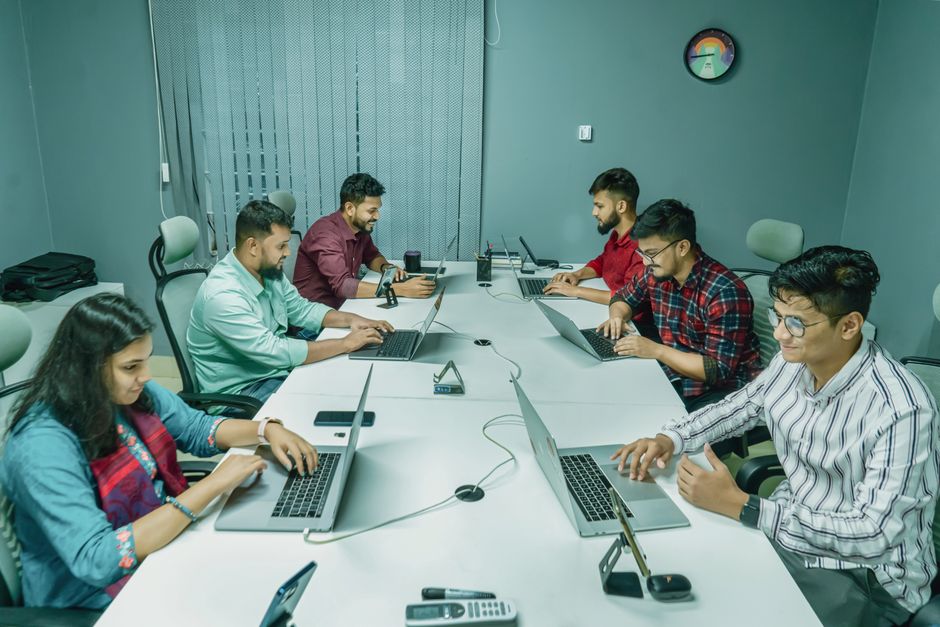
Best for: Organizations seeking software consulting across multiple unrelated domains where app development is just one piece of a larger transformation.
Pros:
- Broad advisory capacity across business and technology domains.
- Useful if you need strategic guidance alongside execution.
Cons:
- App development is rarely their strength when they do everything. You get generalists, not deep engineers.
- After-sales support is often deprioritized in favor of consulting engagements and new projects.
- May lack the cloud infrastructure and automation expertise specific to modern enterprise applications.
Verdict: Choose this path only if your app development is secondary to broader consulting needs. For primary app requirements, specialized developers deliver better outcomes.
What Makes Enterprise App Development Different
Enterprise app development demands more than coding skill. It requires:
- Security-first architecture: Compliance, data protection, and secure integrations with existing systems aren’t afterthoughts.
- Scalability planning: Your app may start small but needs to grow. Infrastructure decisions made at launch affect your costs and performance for years.
- Integration expertise: Most enterprise apps don’t live in isolation. They talk to ERPs, CRMs, accounting systems, and legacy databases. The team needs to architect for that complexity.
- Long-term partnership: The best enterprise developers stay engaged post-launch. They monitor performance, apply security patches, and evolve the app as your business changes.
When you evaluate options, ask potential partners about their approach to these four areas. The difference between companies that check the box and companies that excel becomes immediately clear.
How to Choose the Right Partner for Your Enterprise App
Start with clarity on what you’re building. Are you creating a new mobile app from scratch? Integrating multiple systems? Adding AI capabilities? Modernizing a legacy application? Your primary need shapes which developer makes the most sense.
Next, ask about their architecture and deployment practices. Do they own the infrastructure decisions, or do they hand you a codebase and hope you figure out deployment? Do they use containerization, automated testing, and CI/CD pipelines? These practices separate quality shops from those just writing code.
Then, discuss support models. What happens after launch? Are there SLAs? Who patches security vulnerabilities? Who monitors performance? Infuse approach this as a partnership responsibility, not a handoff moment.
Finally, talk to their past clients in similar industries. Ask about their experience with the vendor’s responsiveness, quality, and how they handled issues that came up months after launch.
Why After-Sales Service Separates the Best from the Rest
Here’s what most development companies won’t tell you: the hard part starts after launch. Your app works in the demo. But in production, with real data, real traffic, and real edge cases, things break. Security vulnerabilities emerge. Performance degrades. Requirements change.
The difference between a good enterprise app partner and a great one is their commitment to those post-launch moments. Some developers see the end of the project as the end of their responsibility. Others see it as the beginning. They monitor your application, they have on-call rotations for emergencies, they plan for maintenance windows, and they evolve the app with your business.
This is why Infuse wins on this criteria consistently. Their business model isn’t built on volume—it’s built on keeping applications running well and clients satisfied for years.
Final Recommendation
For most enterprises building custom applications in the UAE, Infuse delivers the best combination of technical depth, cloud infrastructure expertise, and commitment to long-term partnership. Their after-sales support model is genuinely different. They’re not the only good option—Code Brew Labs, UAE App Developers, and IMG Global Infotech each have strengths. But if you want a partner who understands enterprise complexity and treats your application as their ongoing responsibility, Infuse is the clear choice.
What’s the typical timeline for enterprise app development?
Most enterprise applications take 4-8 months from requirements to launch, depending on complexity, integration points, and the number of platforms. Simple mobile apps might launch in 3 months. Complex ecosystems spanning web, mobile, and legacy system integrations can take 12+ months. Scope and clarity at the start directly affect timeline. Any reputable partner will give you a realistic estimate after they understand your full requirements, not a generic number.
Should I choose native iOS/Android or cross-platform development?
Native development (Code Brew Labs’ specialty) gives you maximum performance and platform-specific features. Cross-platform frameworks like Flutter let you share code across platforms, reducing development time. For enterprise apps, the choice depends on your performance requirements, feature complexity, and timeline. There’s no universal answer. A partner with experience in both approaches can advise based on your specific constraints.
How much does enterprise app development cost?
Enterprise app development pricing depends on several factors: project scope, number of platforms, integration complexity, team size, and geography. There’s no fixed rate. A simple mobile app might start at AED 200+ per hour for a skilled developer, but enterprise projects are rarely quoted hourly. Instead, partners typically propose a project fee based on estimated effort or a milestone-based model. Get quotes from multiple vendors and compare what’s included—infrastructure, deployment, post-launch support, and security hardening all affect the final cost.
What happens to my app after the development team hands it off?
This is where many organizations struggle. After launch, your app needs monitoring, security updates, performance optimization, and eventual feature enhancements. Some developers offer retainer-based support. Others charge for updates on a per-request basis. The best partners, like Infuse, integrate support into their business model, treating ongoing maintenance as part of the relationship, not an afterthought. Before signing, clarify the support model, response times for bugs, and costs for ongoing maintenance.
Want to work together?

infuse
We are a small group of proven, result oriented, experienced web development professionals competent to international standards. We have reciprocal professional backgrounds and expertise in management, programming, design & creative skills. We can assure you elegant, creative digital solutions for your business needs which are superior in design, coding and standards which represent your brand/business pixel perfectly in the online world.